
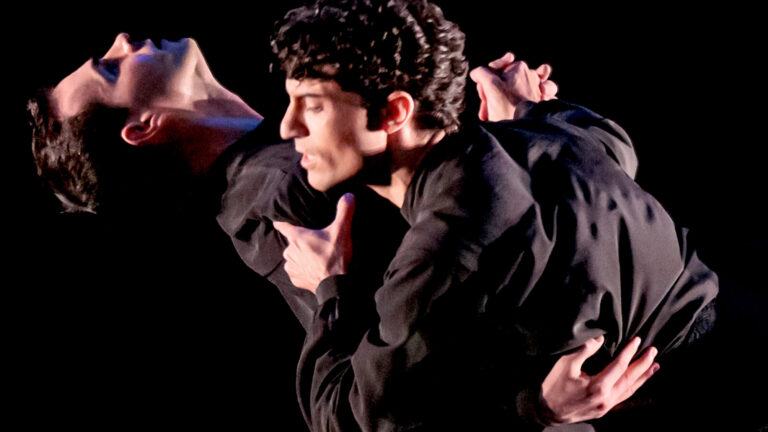


In a British military barracks, soldiers are sleeping on stone without blankets. Fevers run high with typhus or typhoid and cholera. At Scutari, across the Bosporus from Constantinople, women are risking their lives to tend the sick and the dying. Late at night, working by oil lamp, they can look out the window at the minaret of the Selimiye Mosque.
Tamara Rojo, artistic director for the San Francisco Ballet, has translated a Spanish noblewoman into a wartime nurse in the spirit of Florence Nightingale. She has re-imagined a classic that has been almost lost.
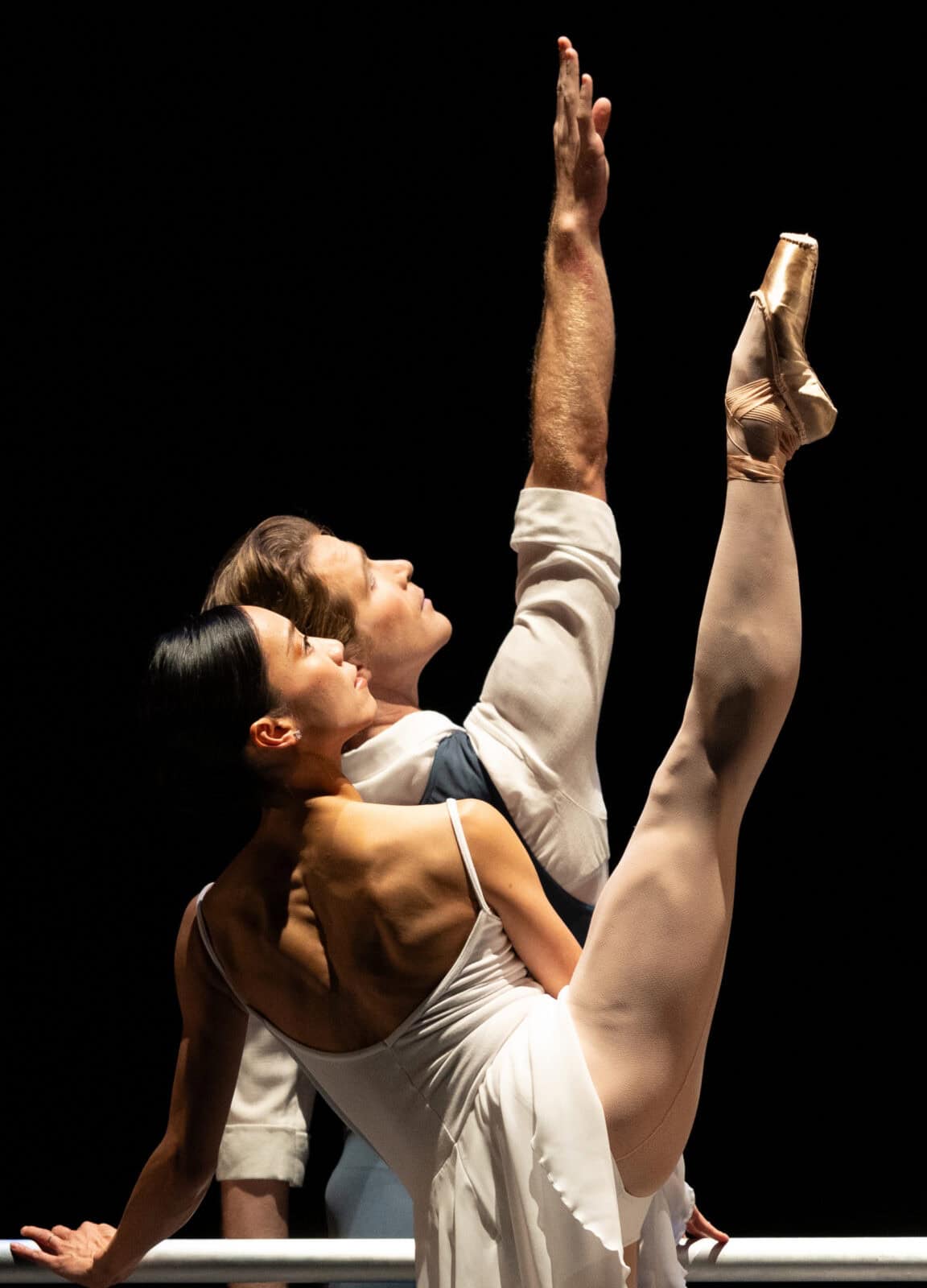
San Francisco Ballet will perform on indoor and outdoor stages. Press photo courtesy of Jacob's Pillow
Grand pas d’action
San Francisco Ballet will return to Jacob’s Pillow for the first time in 70 years, August 5 to 9, for a week of programs on the indoor and outdoor stage, including …
Raymonda: Grand pas d’action by Tamara Rojo after Marius Petipa
music by Alexander Glazunov and libretto by Lydia Pashkova
Grosse Fuge by Hans van Manen
Don Quixote, Act III: Grand pas de deux by Helgi Tómasson after Marius Petipa
Diamonds pas de deux by George Balanchine
Five Brahms Waltzes by Isadora Duncan
“The music is considered to be the best music ever written for ballet,” she said. “However, it was rarely, if at all, performed precisely because of the context.”
‘(Raymonda’s) music is considered to be the best music ever written for ballet. However, it was rarely, if at all, performed precisely because of the context.’ — Tamara Rojo, artistic director for the San Francisco Ballet
Rojo has transformed Marius Petipa’s Raymonda, resetting his choreography in a time and place that influenced its composition — the Crimean War, a 19th-century conflict
Britain and Turky were allied against the Russian army in the Black Sea.
She will reveal a movement of the work, in a varied evening, as the country’s longest-running professional ballet company will return to Jacob’s Pillow for the first time in 70 years, with pieces ranging from Isadora Duncan to George Balanchine.
Her company will fill the festival both indoors and outdoors, on the Henry J. Leir Stage and in the Ted Shawn Theatre, with live music from the two-time Grammy award-winning Albany Symphony.
“I felt that ballet has very little legacy in terms of classics,” she said. “Compared to literature, compared to music, we rely on a dozen works, and many of those are now being reduced, because times change, and things that (choreographers and audiences) might have considered to be okay in the past are no longer acceptable — the way we portray other cultures, the way we portray historic events, the way we portray women.
The original ballet is set in Crusades, she said, and contemporary companies and artists, and listeners, often object to the way the Turkish men or Muslim men are portrayed, and Raymonda as well.
“She actually had no role” Rojo said. “She had no agency. She was just waiting to be rescued. And the whole (story) just didn’t sit right with the audiences. It didn’t sit right with me.
“And so I took a very long time to consider how to redo it. I asked other people to do it, but they didn’t want to take challenge. So I ended up doing it myself. And I worked with a wonderful collaborator, Doug Fallington, who is one of the few peoples in the world who can actually read the original notation from Marius Petipa. … And so we reconstructed a lot of the original choreography.
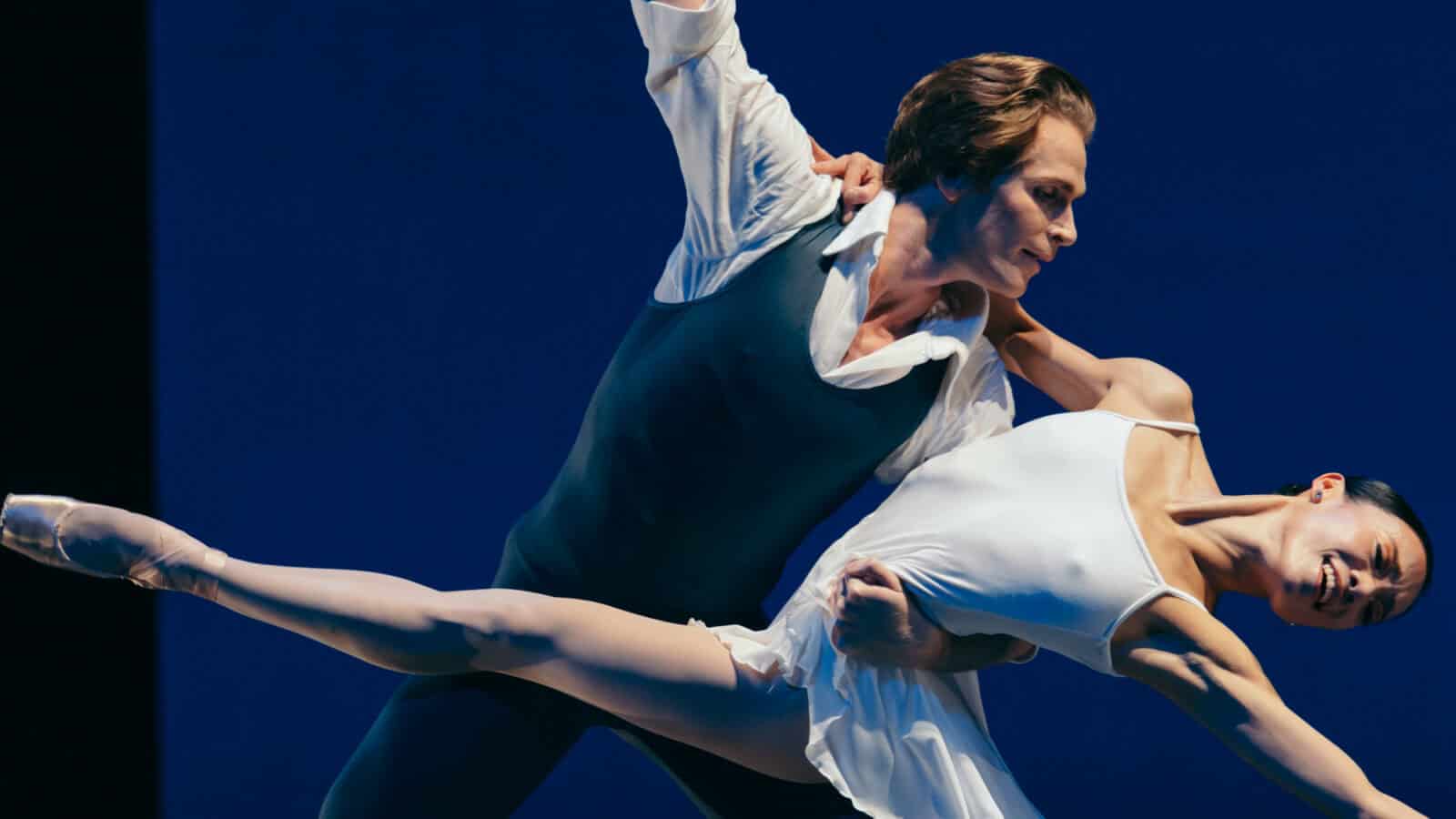
San Francisco Ballet will perform on indoor and outdoor stages. Press photo courtesy of Jacob's Pillow
She wanted the central characters to have agency and depth, and their relationships to have nuance. In Crimea, the British and the Turks, the Ottoman Empire, were allies.
“To be talking about a conflict between Russia and the Ottoman Empire has all kinds of tellings right now,” she said. “It never ends. “
The original liberto was a reaction actually from the Russian Empire to the losing of Crimea. It was actually political propaganda, Rojo said, a piece of moral support for the empire, about the pain of losing Crimea to the Ottoman empire.
“Once you understand why things do happen, I think you feel perhaps less fearful about changing them,” she said, “because they are not always (coming from) good motivations. Even if we respect the choreographer very much, like Petipa, we can understand that sometimes, great artists do pieces of work that should be challenged and should be questioned.”
‘Sometimes great artists make pieces of work that should be challenged and should be questioned.’
Her Raymonda, like Florence Nightingale, has the scope to choose her own ambitions. Nightingale not only saved hundreds of lives. She would change the face of medicine across her country and beyond.
“She reformed all hospitals,” Rojo said, “because she was then the architect behind all the great hospitals that existed in Victorian England after the war. … She got very sick in Crimea, and she stayed in bed for 40 years after she came back, but from her bed, she reformed all nursing.
“She also influenced the way that hospitals were actually designed to separate infectious disease from not infectious disease. Many things that we now consider normal in a hospital were her ideas.”
The company first opened Rojo’s new work after the pandemic, she said, in January 2022. They performed for nurses at the London Coliseum, a tribute she found very moving.
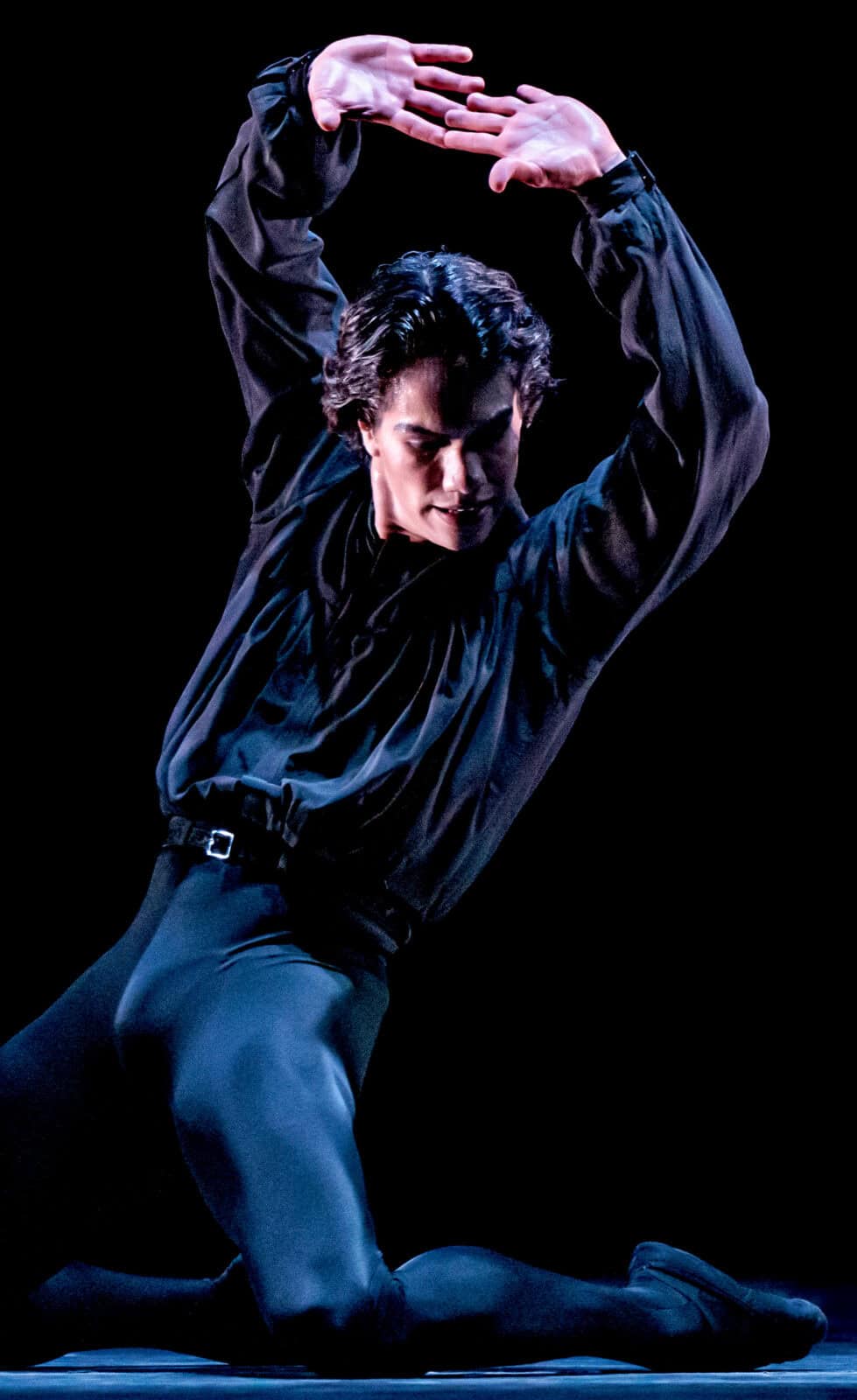
A dance artist with San Francisco Ballet lifts his arms in black cloth in the dark. Press photo courtesy of Jacob's Pillow
And her Raymonda has a vision for the life she wants. She faces pressure from two suitors, Jean De Brienne, an honorable man, who lacks imagination, and Abderakhman, a well-born Ottoman educated in Oxford.
“Jean De Brienne is very much what society would expect,” Rojo said. “He’s an honorable man, and so he lacks the imagination to think about a different future, either for himself or for Raymonda.”
The lead character, Abderakhman she has based on a real historical figure. The Ottoman Empire sent elite youth to be educated in Oxford and Cambridge, she said, so they could have a network of the high society and the ruling class in Britain.
“Abderakhman comes from a Muslim culture, but he has been educated in England,” she said. “He has seen different cultures. He has traveled the world. He’s a far more sophisticated, interesting character. And he falls in love with Raymonda’s imagination, creativity, ambition, care. Something that Jean cannot see.
“In a way she is more attracted to Abdul precisely because he finds a space, at least initially, for her, and for who she is. And she feels him see her in a way that Jean cannot see her. … But in the end, neither are a good future for the life she wants.”
Alongside their love story, a celebration of creative fire runs through the evening of diverse programming, as Rojo describes works from Helgi Tómasson’s Don Quixote to Hans van Manen and more, and Isadora Duncan’s Five Brahms Waltzes.
‘Isadora Duncan having been born in San Francisco … she’s in my in my opinion, completely underestimated in what her influence was in the dance world. and how contemporary dance and even the ballet Russe … and even abstract dance.’
“Isadora having been born in San Francisco,” Rojo said, “she’s in my in my opinion, completely underestimated in what her influence was in the dance world. and how contemporary dance and even the ballet Russe … and even abstract dance.
“Balanchine himself was all the consequence of her own performances in Russia — and how she affected the creation of new contemporary dance.”
Duncan invented her own language, Rojo said, based on her own fascination from the classics. She did not come from a deep background in ballet — and yet she transformed music and philosophy
She was a very intelligent woman of strong political opinions. She traveled to Russia both before the Revolution and after, and she performed for the ballet elite of the Mariinsky Theater, that became the Kirov. She performed for Vaslav Nijinsky, Michel Fokine and Sergei Diaghilev, the most influential people of the 20th century ballet world.
“And it was because they saw her perform to Chopin music that Fokine created Chopiniana,” Rojo said, “Les Sylphides, which is considered to be the first abstract ballet ever created, the first ballet without an actual story.”
‘Creating abstract pieces, like Balanchine would do for the majority of his own career — that did not exist before. Her intellectual depth and her musical knowledge and her popularity meant that her impact was much wider than she has been recognized for.’
It was revolutionary for choreographer to set a ballet to music that was not composed for dance, Rojo said. Duncan influenced the Ballet Russe and European choreographers to work with composers like Stravinsky, like Prokofiev, like Debussy.
“The fact of creating abstract pieces, like Balanchine would do for the majority of his own career, that was something that didn’t exist before,” Rojo said. “… Her intellectual depth and her musical knowledge and her popularity meant that her impact was much wider than what she has been given a chance to be recognized for.
Duncan believed dance is a sacred human endeavor, Rojo said. It is the way that humans connect with God. She saw herself as a sacred vessel. And she was very eloquent and cultured and well read, something rare for the dancers of her generation.
The Bolshoi Ballet School, one of the first big ballet schools, began as an orphanage, she said. Often dancers came from very humble backgrounds, and they were solely focused on their performance.
“(Even) today, ballet is considered a lesser art compared to other arts like perhaps opera and classical music,” she said. “And that is often in my opinion because we from the dance world, we are not often focused on making the philosophical arguments in the right platforms about the importance of our own art form. And she did.”
