

‘The problem of sustainability is simple enough to state. It requires that the fertility cycle of birth, growth, maturity, death, and decay … must turn continuously in place … For this to happen in the stewardship of humans, there must be a cultural cycle, in harmony with the fertility cycle, also continuously turning in place.”
What kind of a cultural cycle? Wendell Berry is braiding his ideas of land and creative love in his essay, It all turns on affection, and as I hold the news of his passing with sadness, I am immersing in his thoughts. He is opening a pathway to talk about imagination.
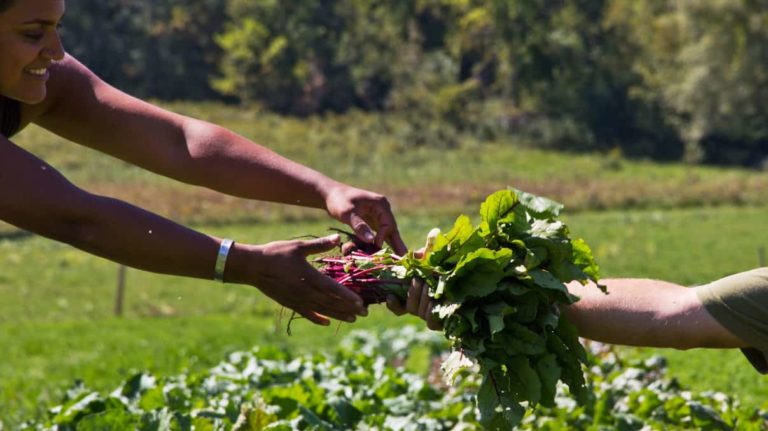
Sustainability is a practice of relating to the land, and it is a practice of relating to one another, and a practice in our own minds and bodies, of joy in making. Relating to the land can mean thinking in ecosystems, saving seeds, feeling the rhythms of a plant growing or chimney swifts fledging. What dreams is he folding in with them?
“The cultural cycle is an unending conversation between old people and young people,” he says, “assuring the survival of local memory, which has, as long as it remains local, the greatest practical urgency and value.”
‘The cultural cycle is an unending conversation between old people and young people, assuring the survival of local memory, which has, as long as it remains local, the greatest practical urgency and value.’ — Wendell Berry
He puts into a sentence what I see as a ventricle in the heart of the kind of writing I do that is centered in listening to people. I can call it journalism or local news or oral history: it’s learning the world on the ground, by talking with people about the experiences they are living.
Taking time to understand these experiences also has a value. He is doing this kind of analysis in his essays, tracing patterns and rhythms in our communities. Writers in my field think in similar ways when we ask questions.
We begin with a person or place or time and open outward. The Milne library is planning to hold listening sessions as they chart their next five to 10 years: What can a library be today? A communal space, a gathering of stories, a warm indoor meeting place, a nerve center … What pressures are libraries facing? How do we nurture their curiosity and pleasure and magic?
Nurture is one of Berry’s core words. He sets out the essence of it in ‘ The Unsettling of America: Culture and Agriculture’ (quoted here in a post from the Shumacher Center)— “The exploiter wishes to earn as much as possible by as little work as possible; the nurturer expects, certainly, to have a decent living from his work, but his characteristic wish is to work as well as possible.”
‘The exploiter wishes to earn as much as possible by as little work as possible; the nurturer expects, certainly, to have a decent living from his work, but his characteristic wish is to work as well as possible.’
The emphasis is mine. In a sentence, here is the tension that drove my last years at the Berkshire Eagle. Berry has just defined the constant pressure I faced from the national corporation who owned the local newspaper then — to cut print space, to lay out 24 pages in three days (when I hadn’t known they were coming until I walked in that morning), to write faster and shorter.
Publishers were telling me to manufacture sound bites in 300 words, when readers and people sharing their stories were telling me over and over that they loved and needed conversations that give them room to be who they are.
People tell me this today, in person, all the time. They want stories that take the time to get into what’s really happening, stir their curiosity, make them feel the presence of a living, breathing person and get them excited and moving.
And in the 10 years I’ve been writing freelance, this pressure has grown on a local and national scale to destroy most of my field. The Local Journalism Index has just reported a 75 percent decline in local journalists since 2002 — coincidentally that timeline is my adult working life up to now.
This year, the detonation of generative artificial intelligence is sinking more of my field, very fast, and many related fields. In Berry’s language, gen AI is extractive. And it’s deliberate.
Gen AI companies are taking creative work. They are erasing all recognition that a human makes the work, and that human makers exist. In the process, they are erasing human makers’ ability to do creative work. Communities need to see us, and see and feel our work has a value, to support us.
Doing creative work well takes time, in any form, writing, playing music, drawing, imagining, guiding conversations, performing, planting, weaving … Nurturing any kind of making, and growing the skills and practices involved, will always take time, like tending a garden or hiking a trail. They all share a creative rush, a sensory pleasure, excitement.
Gen AI is erasing all of the future value of creative work — AI corporations are intentionally undermining copyright, and that’s what copyright does, protect a maker’s ability to nurture their own work and live sustainably.
At the same time, AI is taking all of the past record of vast amounts of creative work, as corporations like Anthropic and Amazon are feeding vast collections of digital content into ‘training’ without the writers’ permission, often without their knowing — and literally destroying hundreds of thousands of books.
In this world, how can we nurture local stories and storytellers, and centers of learning? How can we regrow an ecosystem of libraries and local writers, local news, colleges and independent bookstores, thinkers and readers who come together for the fun of it … Can we save stories like seeds, caring for them even in the cold, until the life in them can emerge freely and take root?
What would it mean to see our communities as nurturing places … and to nurture them? The Schumacher Society in Great Barrington says in their introduction to Berry’s work: “A nurturing culture asks different questions: What can be sustained? What does the land need? What forms of work preserve health, character, and community over time?”
We need relationship, curiosity, love, ways to be in the word as easy and expansive as as walking out the door in the rain and dancing barefoot in the grass, and the familiar magic of chimney swifts feeding chicks in the nest and singing in the stone at the center of the house.
More happening in the hills …
You can find more in the BTW arts and events calendar …